How Growth Mindset Helps in Learning from Failure?
Failure is often perceived in a negative light. However, the reality is that we all occasionally fail at certain activities. Learning from failure is perhaps the most effective method of learning. Teaching kids not to be afraid of failure is crucial. Fear of learning can be debilitating; it may cause us to shy away from difficult activities and sap our drive and ambition. In today’s competitive environment, many parents looking for the top schools in Lucknow prioritise institutions that focus not just on academic success but also on life skills like resilience and adaptability.

In this blog post, children will understand the importance of learning from failure and how a growth mindset can help in this process.
Why Learning from Failure is Important for Students?
Below are the reasons that showcase the importance of learning from failure for students:
Builds Resilience
Students learn to bounce back stronger after setbacks and develop emotional strength.
Encourages Critical Thinking
Failure pushes students to reflect, analyse, and find better solutions.
Reduces Fear of Trying New Things
When failure is embraced, students become more open to exploring new opportunities.
Promotes Long-Term Success
Many successful individuals have achieved their goals by learning from repeated failures.
Comprehending the Growth Mindset
According to psychologist Carol Dweck, a growth mindset is based on the belief that aptitude and intellect can be enhanced with hard work, education, and persistence. A fixed mentality, on the other hand, holds that a person’s skills and intelligence cannot be altered. Since they see failure as a reflection of their limits, students with a fixed mindset frequently avoid difficulties. On the other hand, those who have a growth mindset view failure as a chance to develop and improve themselves.
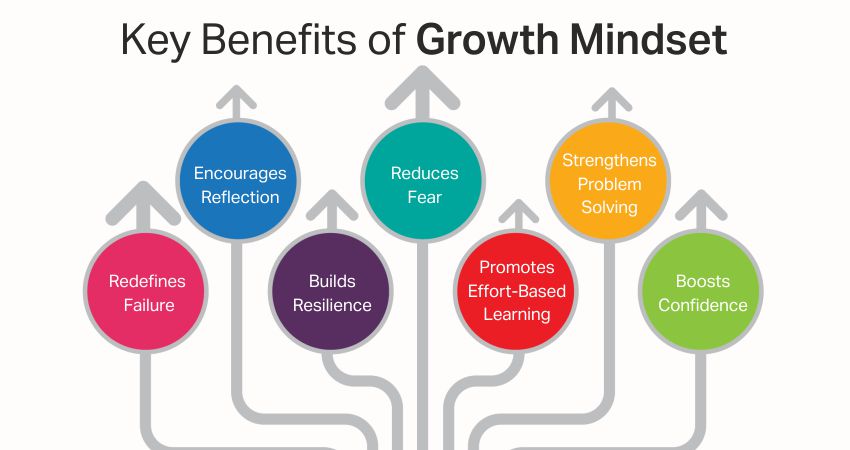
How Fostering a Growth Mindset Can Encourage Learning From Failure?
Here, the discussion will be done on how fostering a growth mindset can encourage learning from failure:
Redefines Failure as a Learning Opportunity
A growth mindset helps students understand that failure is not a dead end but a valuable part of the learning process. Instead of feeling discouraged, they begin to see mistakes as feedback that guides improvement. This shift in perspective allows them to stay positive and motivated even after setbacks.
Encourages Reflection and Improvement
Students with a growth mindset take time to reflect on their mistakes and identify what could have been done better. This habit of self-evaluation helps them learn from their experiences and make better decisions in the future. Over time, it leads to consistent improvement and a deeper understanding.
Builds Resilience and Persistence
When students believe that abilities can be developed, they are more likely to keep trying again and again despite facing numerous difficulties. A growth mindset helps them stay determined and not give up easily. This resilience is essential for overcoming challenges not just in academics but in life as well.
Reduces Fear of Making Mistakes
Fear of failure often prevents students from trying new things. A growth mindset creates a safe space where mistakes are accepted as part of learning. This encourages students to participate more actively, experiment with ideas, and step out of their comfort zones.
Promotes Effort-Based Learning
Students begin to focus more on the effort they put in rather than just the outcome. They understand that success comes through practice, patience, and dedication. This mindset helps them stay committed to learning even when progress seems slow.
Strengthens Problem-Solving Skills
Facing failure encourages students to think critically and explore different ways to solve a problem. Instead of giving up, they learn to adapt their approach and try new strategies. This enhances their analytical thinking and ability to handle complex situations.
Boosts Confidence and Self-Belief
As students learn from their mistakes and gradually improve, their confidence grows. They begin to trust their abilities and feel more capable of handling challenges. This confidence plays a crucial role in their overall academic and personal development.
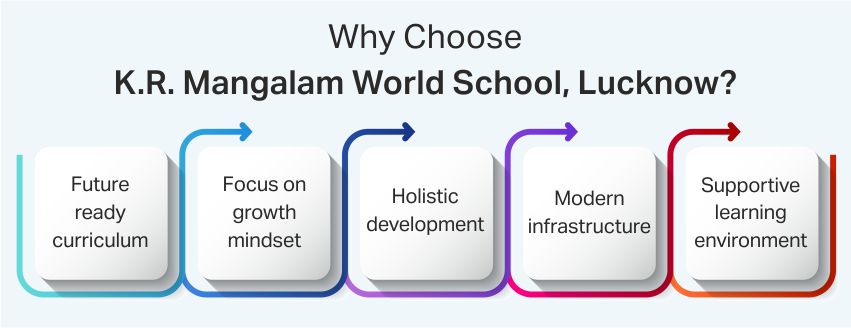
K.R. Mangalam World School, Lucknow: Nurturing Resilient Learners
The goal of K.R. Mangalam World School in Lucknow is to help pupils develop a growth mindset. Through an encouraging and stimulating learning environment, the school helps kids embrace difficulties, learn from their mistakes, and gain confidence. With a strong academic framework, modern teaching methods, and emphasis on holistic development, it stands among the top CBSE schools in Lucknow, preparing students for real-world success.
Parents can find this school by searching for the best school in Ratan Khand Lucknow.
Conclusion
One of the finest investments we can make in children’s future is to help them embrace difficulties and learn from their failures. By fostering a growth-based mentality, we provide students with the abilities they will need to confidently and tenaciously navigate an increasingly uncertain world.
Parents exploring the top schools in Lucknow should prioritise institutions that nurture this mindset. Schools like K.R. Mangalam World School, Lucknow, ensure that students not only excel academically but also grow into confident and capable individuals ready to face the future world.
Explore K.R. Mangalam World School, Lucknow, and take the next step towards nurturing a confident, future-ready learner.
FAQs
Q1. Why is learning from failure important for students?
It helps students develop resilience, confidence, and problem-solving skills.
Q2. How can schools encourage learning from failure?
By creating a supportive environment, promoting participation, and providing constructive feedback.
Q3. What role do parents play in the process of learning from failure?
Parents can encourage effort, avoid criticism, and help children reflect on their mistakes.
Q4. Do top schools in Lucknow focus on life skills like resilience?
Yes, many top CBSE schools in Lucknow emphasise holistic development along with academics.


Comments
Post a Comment